How can the resilience of local authorities be strengthened? The key lies in close cooperation between the research community, politicians, aid organisations and the general public.
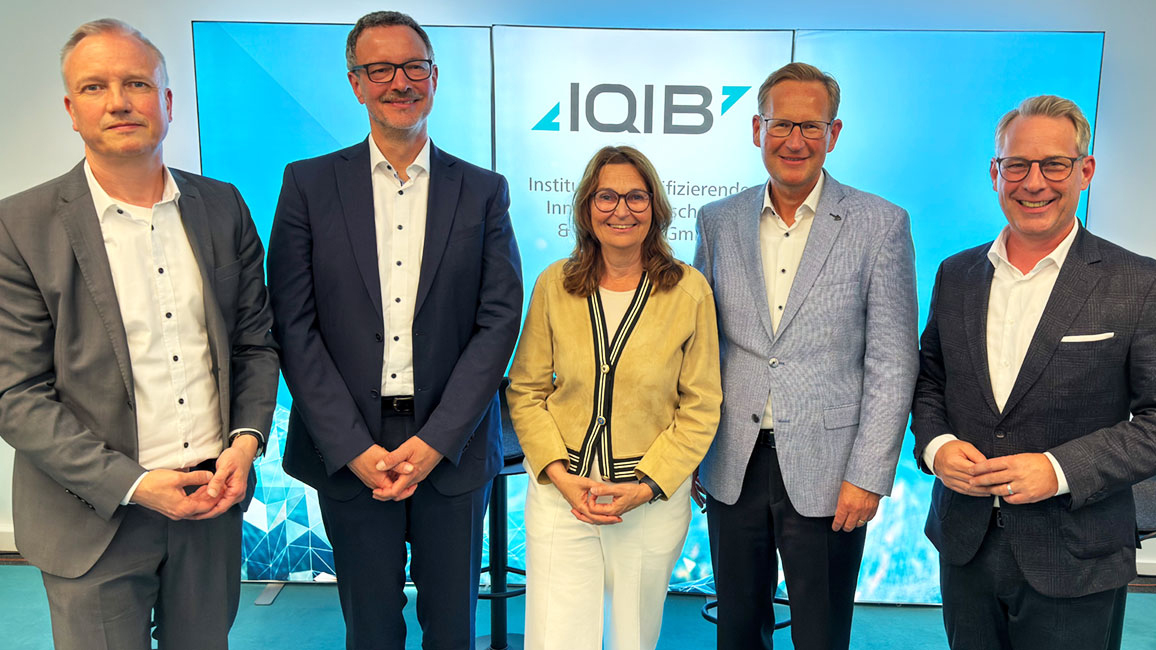
Wigand Fleischer (Managing Director, IQIB), Dr Joachim Götz (DLR), Mechthild Heil (Member of the Bundestag, CDU), Roman Noetzel (Managing Director, IQIB), David Bongart (Managing Director, Zukunftsverein Ahr e.V.)
IQIB
Premiere: The first “InnovationTalk@IQIB” was a successful launch for our new and interactive series of discussions, featuring a lively and inspiring debate.
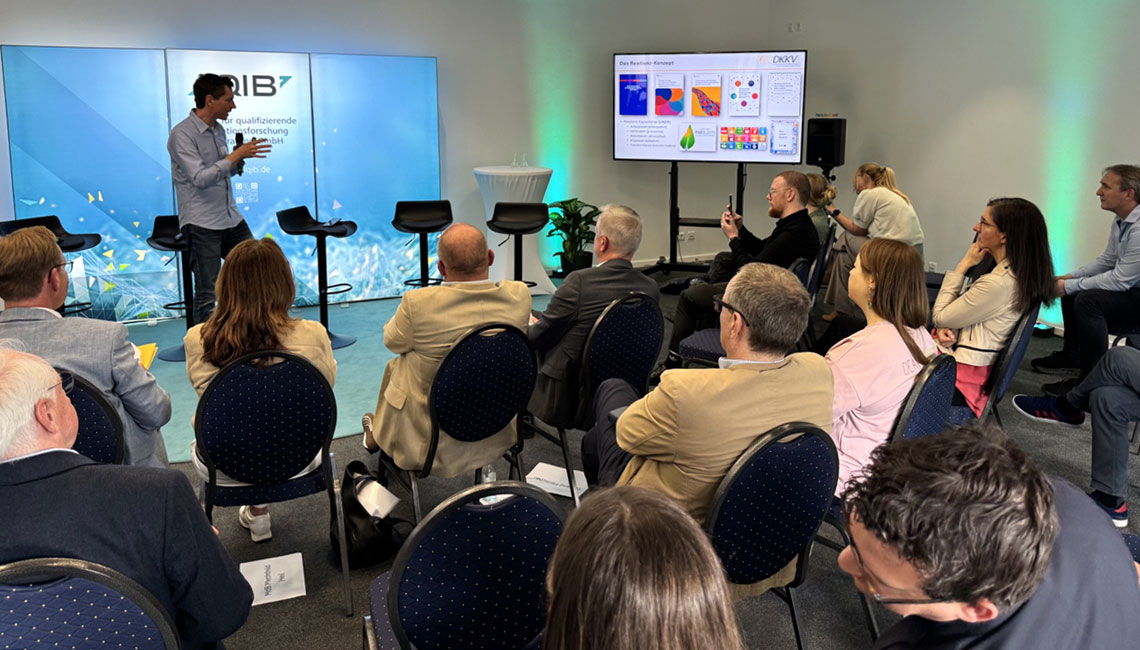
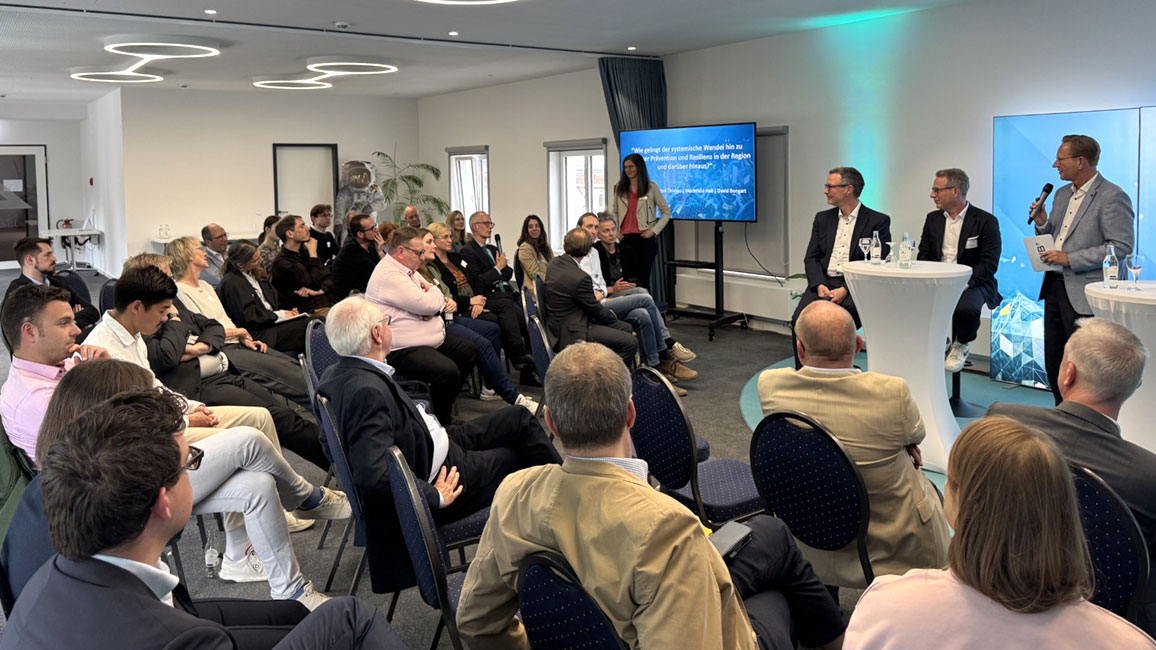
How can we strengthen local resilience and work together to develop practical solutions? To kick things off, three exciting keynote presentations from the academic world set the scene for a discussion with experts from research, public administration, politics, and practice.
Exciting insights from the world of science at the “1st InnovationTalk@IQIB”
Dr Bert Droste-Franke (IQIB): “Digital solutions to strengthen local resilience”
Dr Joachim Goetz (DLR): “Practical solutions for civil protection: RESITEK”
Dr Benni Thiebes (DKKV): “Resilience as a national priority – opportunities and challenges”
1. Strengthening civil society’s capacity for self-preparedness and decentralised structures
The most important building block for strengthening resilience is the development of crisis-proof, local infrastructures in civil protection and disaster management, with the targeted involvement of the public. Mechthild Heil, Member of the Bundestag for Rhineland-Palatinate (CDU), emphasised during the discussion: “We can only achieve societal resilience if those in charge involve the public.”
Dr Benni Thiebes from the German Committee for Disaster Reduction e.V. (DKKV) also advocated this approach. Whilst a great deal is invested in disaster and civil protection in Germany, he noted, the focus must shift to disaster prevention, and the public must be brought ‘on board’ in this process.
Michael Schneider, CDU group leader on the Ahrweiler District Council, put forward a concrete proposal: “The public must be given a sense of responsibility, for example in the operation of mobile flood protection systems.” He added that it is also necessary to establish decentralised structures, such as village community centres, which ensure emergency provision for all citizens.
IQIB
IQIB
IQIB
IQIB
IQIB
IQIB
IQIB
2. Linking academia and practice – a focus on knowledge transfer
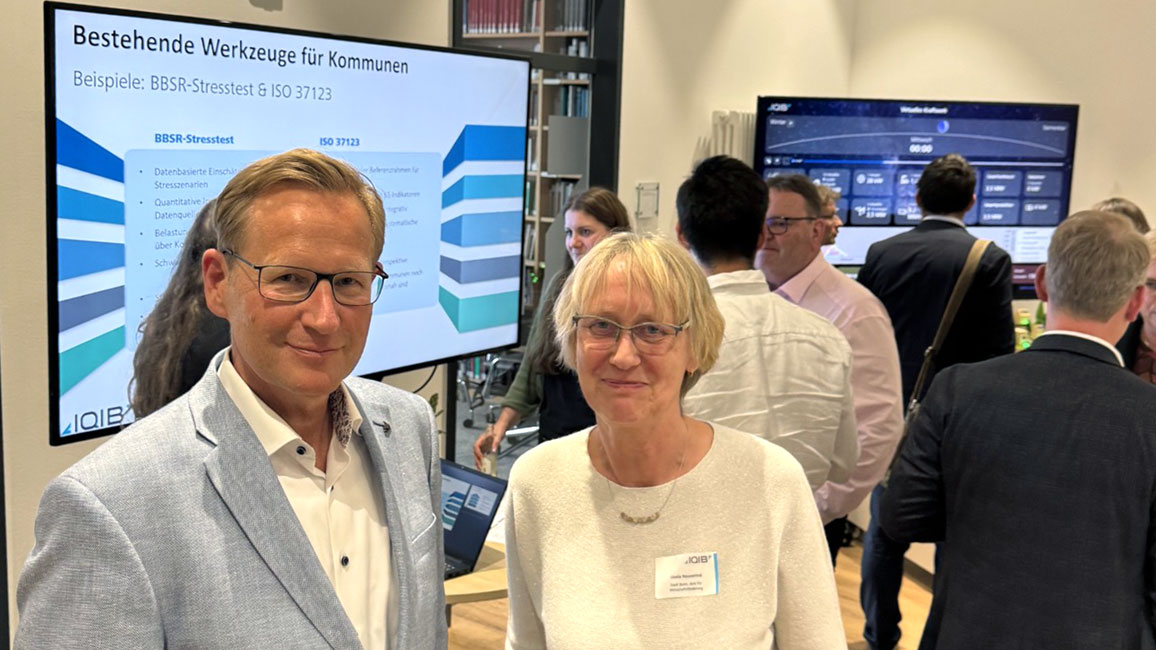
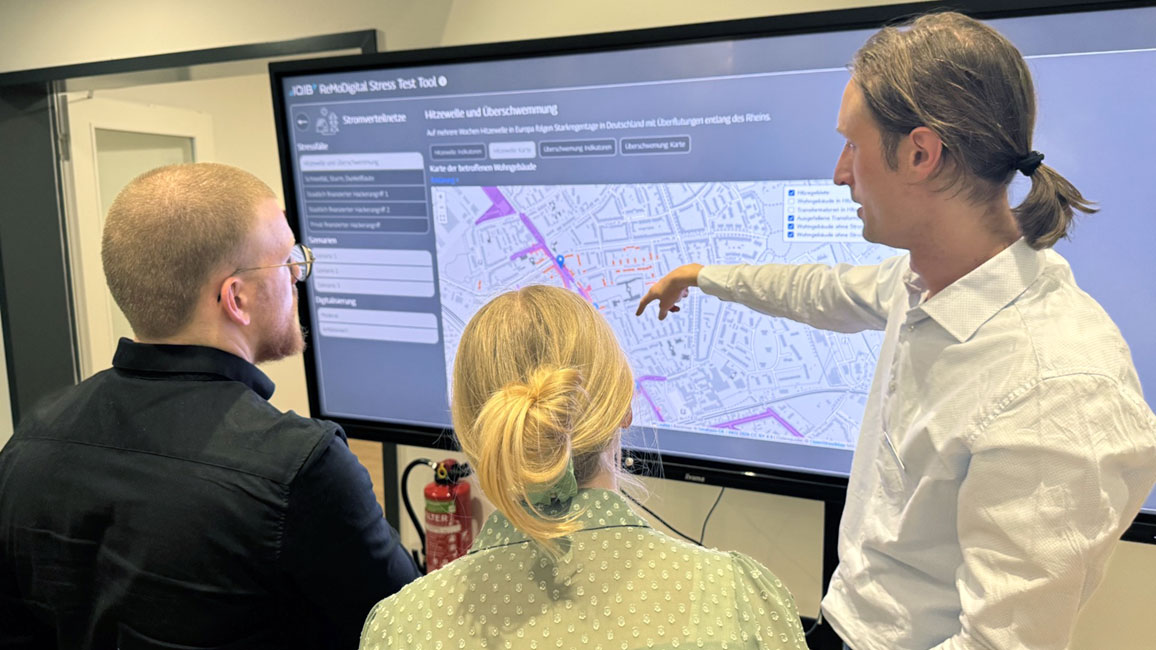
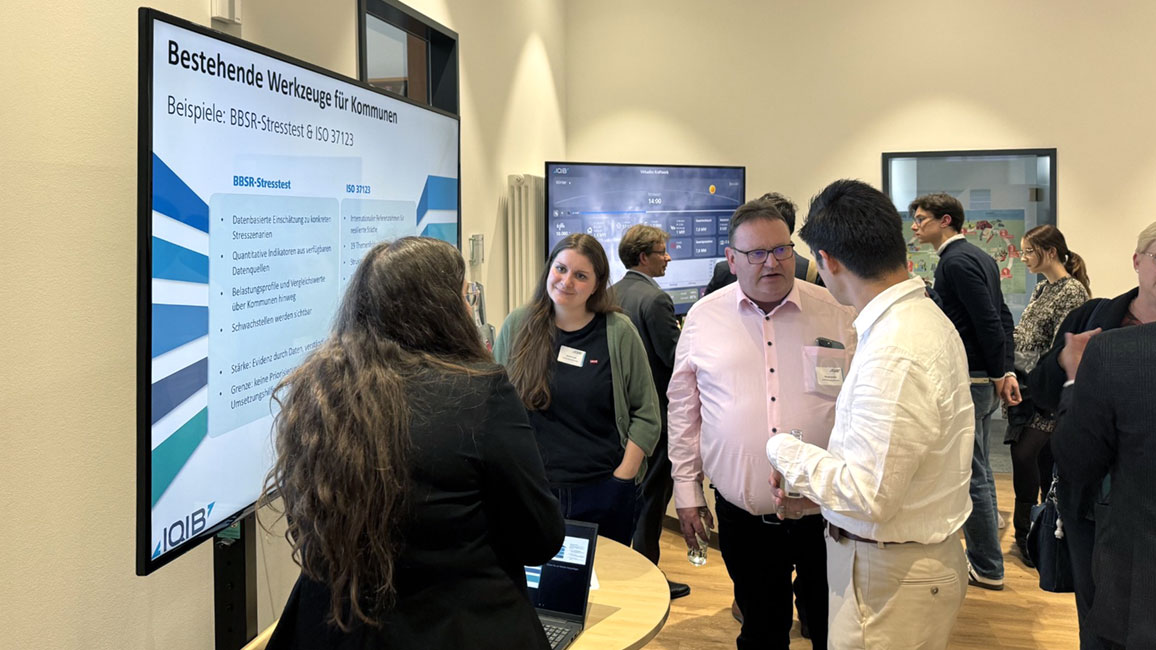
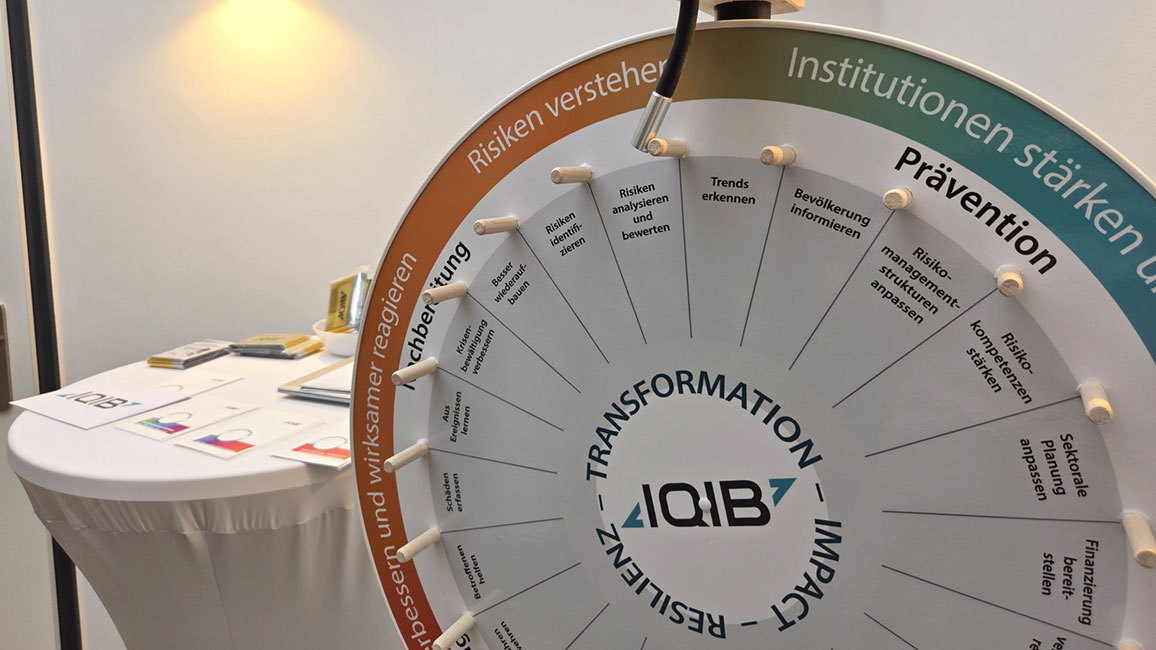
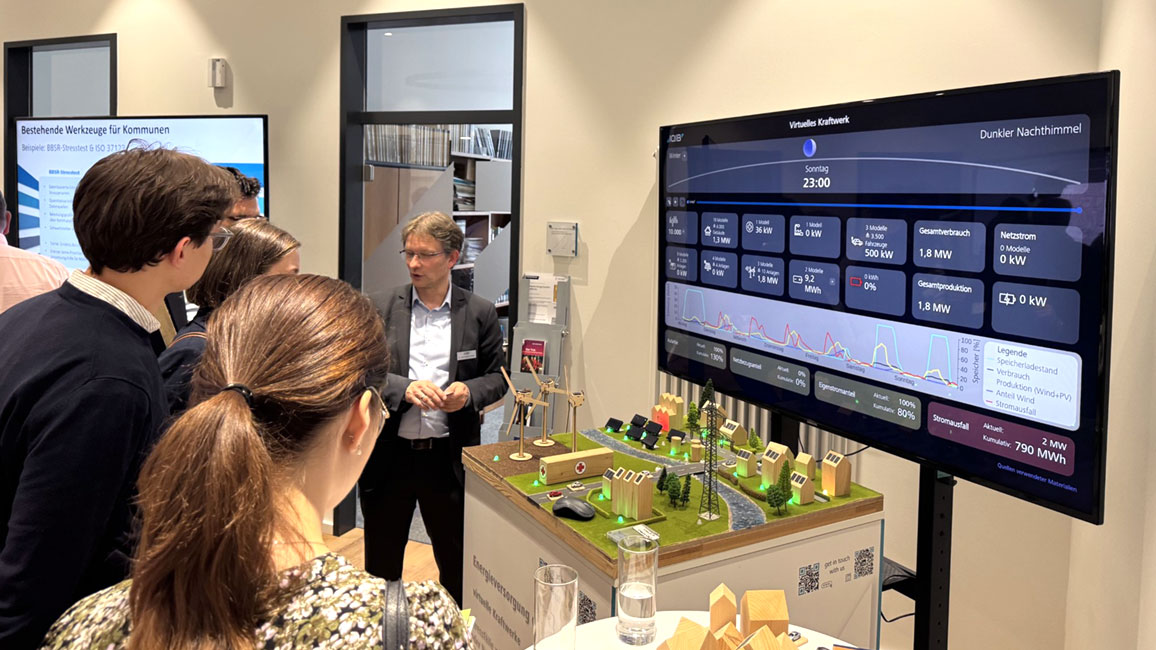
Dr Bert Droste-Franke, Head of the ‘System Evaluation & Societal Future Viability’ research area at the IQIB, presented resilience as a multifaceted theoretical concept that must be specifically tailored for practical application. Implementing resilience in local government practice requires input from various academic disciplines and experts with practical experience. Dr Bert Droste-Franke outlined solutions from IQIB for strengthening local resilience, which attendees were able to experience through multimedia displays at various stations following the panel discussion.
Dr Joachim Göetz from the Institute of Flight Systems at the German Aerospace Centre (DLR) presented the project ‘Resilient Technologies for disaster control’ (RESITEK). The project leader emphasised that dialogue with the local community is important for understanding the problems and determining to what extent technologies could provide a solution. In the RESITEK project, 16 DLR institutes from the fields of aviation, space, energy, transport and security are pooling their expertise to improve civil protection and disaster management.
A major live demonstration is planned for June 2026 in the Ahr Valley, at which innovative technologies will be presented in a realistic flood scenario. DLR will demonstrate how information from satellites and drones, the monitoring of critical infrastructure, and ground-based or robotic reconnaissance can be combined to form a comprehensive situational picture. The district of Ahrweiler, the Bavarian Red Cross and IQIB are involved as practical partners.
To promote direct exchange between research and civil protection, IQIB, together with Daniel Gronwald - local representative of the Federal Agency for Technical Relief (THW) in Sinzig - leads the regional civil protection network H-Kat-Net. Gronwald presented the network’s work and emphasised the importance of direct exchange in bridging the gap between theory and practice.
The “Zukunftsregion Ahr e.V.” plays a key role in engaging the local population in the Ahrweiler district. Through participatory projects, citizens are actively involved in shaping the region, explained David Bongart, the association’s managing director. “Resilience can be learnt,” emphasised Bongart. Many people from the generation that has experienced both Covid-19 and the flood disaster in the Ahr Valley have developed enormous resilience as a result. “We are considering how we can pass on this knowledge. How can those affected, who feel ready and strong enough to do so, become advocates and help others to strengthen their resilience?” said Bongart.
3. Fostering resilience in education
Susanne Müller, a member of the Rhineland-Palatinate State Parliament (SPD), emphasised that resilience is an essential skill in education and must be developed and nurtured from the very beginning. Starting from nursery school, this includes, above all, greater support for socio-emotional development, out-of-school learning environments, disaster preparedness drills, as well as programmes to promote resilience, stress management training, experience-based project work and much more. “Pupils here in the region experienced the flood disaster of July 2021 and its consequences first-hand. The knowledge gained at school is only of limited help in coping with disasters of this kind,” Müller reflected. “Anyone who takes disaster preparedness seriously must involve the public: in schools, in everyday life, and in taking personal responsibility,” Müller emphasised.
Michael Schäfer, head of department at the Ahrweiler District Administration, outlined the ongoing plans for the IRRC as a Citizen Science Centre. The Resilience Centre is intended to bring together research within a science hub whilst, at the same time, raising public awareness of disaster risk management through events and gamification. He stressed that it is important to invest in prevention – although it remains to be seen how the project can be funded. A Memorandum of Understanding (MoU) signed as early as the beginning of 2025 between the district of Ahrweiler, the German Aerospace Centre (DLR) and IQIB underlines the strategic relevance of this project, said Schäfer.
What’s next?
“Resilient societies emerge when knowledge, innovation and interdisciplinary collaboration are integrated at an early stage. The first ‘InnovationTalk@IQIB’ has demonstrated that interdisciplinary dialogue with stakeholders from academia and industry forms the foundation for this transformation,” said Roman Noetzel, Managing Director at IQIB, summarising the event.
The next ‘InnovationTalk@IQIB’ will take place on 18 November on the topic of ‘Artificial Intelligence’.